
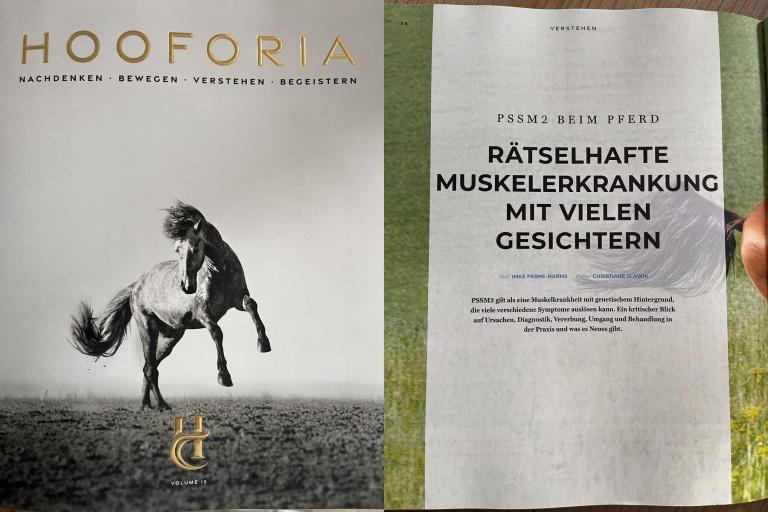
PSSM1, PSSM2 and MIM in horses: Correlations of a mysterious muscle-related problem
26.05.2026
Not a specific disease – but a complex interplay of genetic and environmental factors
A key finding of the article: symptoms of exertional myopathies in horses do not represent a single, clearly defined disease, but rather a multifaceted clinical picture with a variety of underlying causes. The authors agree that a correct assessment of the often non-specific symptoms requires consideration of as many relevant factors as possible – including genetic predisposition, nutrition, training load, husbandry conditions and individual stress tolerance.
Taking symptoms seriously – without jumping to conclusions
Typical signs of exertional myopathy include muscle hardness and tension, stiffness, irregularities in gait, intermittent lameness, excessive sweating, or sudden resistance under saddle. In chronic cases – as frequently observed with MIM – muscle wasting and failure to develop muscle mass may also be present. Because many of these symptoms can point to entirely different underlying conditions, careful differential diagnosis is essential.
Dr. Manz and his co-authors emphasise that genetic test results – such as those from a PSSM1 or MIM DNA test – must never be interpreted in isolation. What always matters is the combination of genetic predispositions, clinical presentation and the individual environmental circumstances of the horse.
Interdisciplinary diagnostics as the key to clarity
For a well-founded assessment, the experts recommend a multi-step approach: veterinary history-taking and clinical examination, supplemented where necessary by muscle biopsy. In parallel, husbandry, nutrition and training load should be critically reviewed. Genetic tests for MIM and PSSM1 provide the decisive additional piece of the puzzle – as part the complete picture and to clarify the existing genetic burden.
Generatio offers specialised DNA tests as well as comprehensive expert consultation by veterinarians, geneticists and nutrition specialists. Further information, sample collection instructions and consultation requests are available at: